Anonymized - ecommerce marketplace
One governed AI software delivery workflow for more than 260 engineers
Engineering teams used different AI coding tools without a shared route for architecture, repository context, tests, security checks, review evidence, or production approval.
Representative anonymized engagement. This page describes an anonymized engineering transformation. Metrics apply to the measured workflow and ticket class and are not a promise of future results.
The problem
Teams across the marketplace had started using AI coding assistants, but each team had created its own habits. Some tools received too much repository context. Generated changes arrived without the architecture decisions or acceptance criteria a reviewer needed. QA saw faster code output, but not a consistent improvement in release quality.
The company needed a way to use different approved coding tools without creating a different software delivery process for each tool.
The workflow
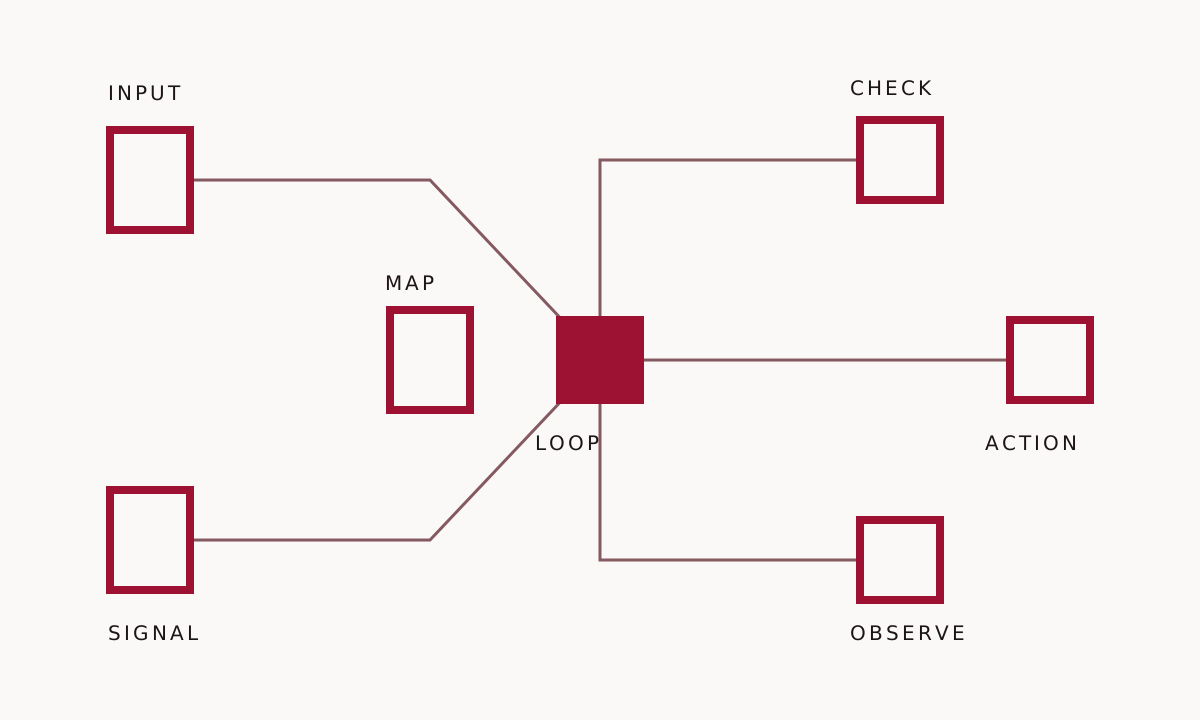
We designed one AI SDLC around the company's repositories, controls, and release process. A ticket could enter the AI workflow only after the expected behavior, boundaries, and acceptance tests were clear. The agent received a bounded repository context and the tools required for the task.
Generated changes passed through automated tests, static analysis, security checks, and policy gates. Reviewers received the plan, changed behavior, evidence from the checks, and any known limits. Production integration remained inside the company's existing approval and deployment controls.
Tool independence
The workflow did not depend on one coding assistant. Teams could choose from approved tools while repository permissions, context rules, quality gates, audit records, and release evidence stayed consistent.
This removed the need to rebuild governance each time the company changed a model or coding product.
Measured result
More than 260 engineers used the unified workflow. For the ticket class selected for comparison, the typical path from accepted work to production became about eight times faster. Fewer than 3% of measured tickets returned from QA because of a reported defect.
The company kept one development workflow across the approved tools, with adoption, lead time, review effort, and escaped defects measured as operating metrics.
Read more about the AI-native engineering service.